
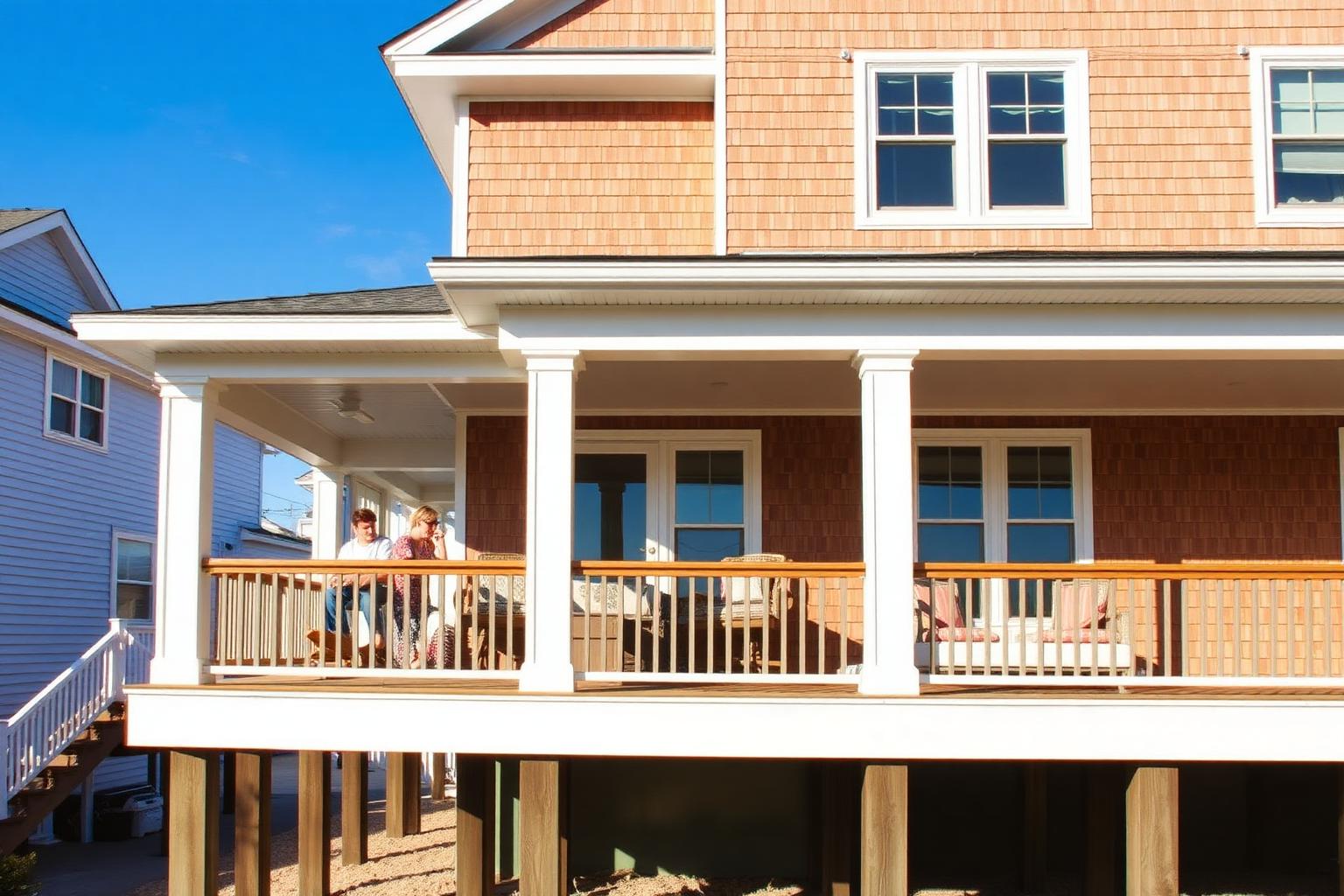
Why flood zones shape everything
Sea Bright sits on a narrow barrier strip between the Shrewsbury River and the Atlantic. Many homes here fall inside a FEMA Special Flood Hazard Area, which means renovation work — especially anything considered “substantial improvement” — is governed by flood-resistant construction rules, not just ordinary building code.
The key number is Base Flood Elevation (BFE). If your project triggers the substantial-improvement threshold, the home may need to be elevated or finished with flood-damage-resistant materials below BFE. That single fact can change layout, foundation work, mechanical placement and material selection.
What “substantial improvement” means
If the cost of your renovation equals or exceeds 50 percent of the structure’s market value (excluding land), the work is treated as a substantial improvement. At that point, the entire structure must be brought into compliance with current flood regulations — not just the part being renovated.
Many Sea Bright homeowners are surprised that a kitchen and bath renovation can cross the 50 percent threshold. Knowing this before you design changes the whole plan.
Materials below Base Flood Elevation
Below BFE, building code typically calls for flood-damage-resistant materials — materials that can survive wetting and drying without losing structural integrity. That means closed-cell foam insulation instead of fiberglass batts, pressure-treated framing in certain locations, and finishes designed to be sacrificial or washable.
This is not a downgrade. It is the reason a shore home survives the next storm with interior damage rather than a total gut.
Mechanicals and utilities
Furnaces, water heaters, electrical panels and HVAC equipment generally must be located at or above BFE. In a renovation, that can mean relocating equipment to a higher floor or an elevated platform. It also affects where ductwork and plumbing run.
Insurance and financing
Flood insurance premiums are directly tied to elevation and compliance. A renovated home that meets current flood rules can carry meaningfully lower premiums than one with grandfathered noncompliance. If you are financing the project, your lender may also require elevation certificates and flood compliance documentation before closing.
Permits in Sea Bright
Sea Bright construction permits are handled through the borough, and flood-zone projects typically require additional documentation — elevation certificates, engineered flood vent calculations, and sometimes a V-zone or A-zone construction review. Because review timelines can be longer than inland towns, submitting early matters.
How we approach shore homes
We have worked on homes across the bayshore and barrier-island communities. For Sea Bright projects, we coordinate with the borough on flood compliance, help you understand where the money has to go, and design for materials that look good and survive the environment they live in.